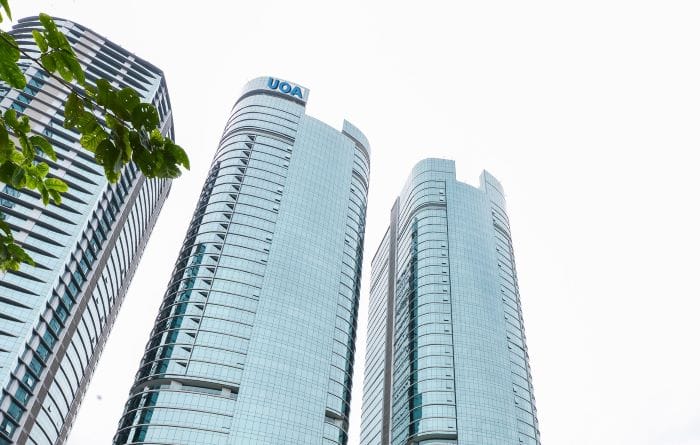
On May 25, 2026, the High Court allowed a Malaysian property company to challenge a RM165.66 million tax bill — and the outcome could reshape how developers, REITs, and property investors think about asset disposals and tax risk in Malaysia.
The Case at a Glance
Distinctive Acres Sdn Bhd — an investment unit of UOA Development Bhd — has been granted leave by the High Court to proceed with a judicial review against the Inland Revenue Board (IRB). The ruling was delivered on May 25, 2026 by Judge Alice Loke Yee Ching, with a temporary stay of the tax assessment granted until the next hearing on June 16, 2026.
The dispute centres on the 2020 sale of UOA Corporate Tower A in Bangsar South, Kuala Lumpur, to UOA Real Estate Investment Trust (UOAREIT). The IRB assessed the transaction gains as being subject to corporate income tax — resulting in a principal tax bill of RM113.28 million, plus a penalty of RM52.38 million, totalling RM165.66 million.
Income Tax vs RPGT Exemption: The Core Dispute
Distinctive Acres argues the gains from the sale should fall under the Real Property Gains Tax Act 1976 (RPGTA) — not corporate income tax. More specifically, the company claims the transaction qualifies for an exemption under the Real Property Gains Tax (Exemption) (No. 4) Order 2003, a ministerial order designed to reduce tax friction when developers inject properties into REITs.
The IRB takes the opposing view: that the transaction constitutes taxable business income under the Income Tax Act. The company’s lawyers — Datuk S Saravana Kumar and Tan Jia Hua of Rosli Dahlan Saravana Partnership — argued the IRB’s assessment was illegal, void, beyond its authority, irrational, and a denial of legitimate expectations. The IRB is represented by Nur Irmawatie Daud.
Why This Matters to Property Investors
This may look like a corporate tax fight — but it has real consequences for property investors. Here is why:
1. It Directly Affects REIT Distributions
Malaysian REITs — including UOAREIT, IGB REIT, Pavilion REIT, and Sunway REIT — grow by acquiring new properties from developers. The 2003 RPGT exemption order was created specifically to make those acquisitions tax-efficient. If the IRB’s position prevails and such transfers are reclassified as corporate income, injecting assets into REITs becomes significantly more expensive. The likely result: slower REIT portfolio growth, reduced distributions, and weaker investor sentiment across the listed REIT sector.
2. Tax Risk Is a Real Investment Risk
Property investors often focus on price, yield, and location — but this case is a sharp reminder that tax interpretation is also a risk factor. A RM165 million liability on a single transaction shows how dramatically a deal’s financial outcome can swing depending on how the tax authority classifies it. Individual investors face the same risk when selling property, especially through a company structure.
3. Court Rulings Set Industry Precedent
A ruling here will not just affect UOA Development. It sets a precedent that applies to every developer who has sold — or plans to sell — assets to a REIT under the 2003 exemption framework. The Malaysian property development sector will be watching the June 16 hearing closely.
About the 2003 RPGT Exemption Order
When Malaysia began building its REIT sector in the early 2000s, the government introduced the RPGT (Exemption) (No. 4) Order 2003 to encourage developers to inject assets into newly formed REITs without being penalised by capital gains tax. This exemption has underpinned many of the largest REIT transactions in Malaysia over the past two decades. Whether it correctly applies to the 2020 UOA Corporate Tower A sale is now a matter for the courts to decide.
What Should Investors Do?
- Watch the June 16, 2026 hearing. This is the next key date — the court will determine whether the temporary stay continues and when the full judicial review proceeds.
- If you hold Malaysian REIT units, monitor how this unfolds. A prolonged or unfavourable ruling could create short-term volatility in REIT-linked stocks and distributions.
- If you own property through a company, speak to a tax advisor before any disposal. The distinction between RPGT and income tax is not always straightforward.
- Do not make reactive decisions. One legal case does not change the fundamentals of the Malaysian property market. Location, demand, and yield still drive long-term returns.
Final Thoughts
The UOA tax dispute is one of the most significant property-related legal cases in Malaysia right now. The High Court has allowed it to proceed — and the ruling that follows will matter well beyond the parties in the courtroom. Stay informed, understand your own tax position, and make decisions based on fundamentals rather than short-term noise.
At Dream Property Posh, we keep a close eye on developments that affect the Malaysian property market — from new launches to regulatory shifts. If you want honest, up-to-date guidance on where and how to invest, reach out to Nick directly.
WhatsApp Nick: chatmamba.com/dreamproperty
Free consultation. No obligation. Honest advice.