On 21 August 2026, FBG Holdings Bhd told Bursa Malaysia that its wholly owned subsidiary FBG Land Sdn Bhd had written to Penang Development Corporation (PDC) proposing to stop work on the MediCity development in Batu Kawan. The parcel involved is 51.172 acres in Bandar Cassia, agreed at RM111.45 million in cash under a master purchase and development agreement signed on 20 January 2025. That first phase carried an estimated gross development value of about RM2 billion over eight years. Nothing has been built on it. If you are shortlisting a new launch in Batu Kawan, the useful takeaway is not that one company walked away — it is that a headline development value is a plan, not housing supply.
What Was Filed, in Plain Terms
FBG Land wrote to PDC on the same day the filing was made, proposing that the two parties discuss an orderly conclusion of the collaboration under the agreement. Discussions between them were still ongoing at the time of the filing. FBG said further announcements would follow once there is a material development or once both sides agree on terms.
Three things were not disclosed. The filing did not give a reason for stepping away. It did not state the status of the proposed land purchase. It did not spell out the financial consequences, if any. The agreement provided for a deposit equal to 10% of the purchase price, payable when the master agreement was signed, and refundable if the conditions precedent were never fulfilled — but the latest filing does not say whether that deposit was paid, where it stands now, or whether any refund or settlement forms part of the discussions.
This matters for how you read the news. A proposed cessation under discussion is not the same as a terminated contract, and neither one is the same as a cancelled township. As of the filing, it is a letter and a negotiation.
Announced Plan Versus What Actually Exists
The MediCity plan was substantial on paper. Roughly 30% of the first phase was to be medical: a 200-bed specialist hospital, a wellness centre and a healthcare complex. The rest was to include a commercial area branded FBG Global Park, an international school, and residential components in the form of serviced apartments and villas. The wider MediCity master plan covered about 235.8 acres. The first phase alone was the 51.172-acre parcel.
| Element announced | Figure stated | Status as at the August 2026 filing |
|---|---|---|
| Master agreement with PDC | Signed 20 January 2025 | Cessation proposed by FBG Land; under discussion |
| First-phase land | 51.172 acres, Bandar Cassia, Mukim 13 | Purchase remained subject to conditions precedent |
| Agreed land consideration | RM111.45 million cash | Completion status not disclosed |
| Deposit | 10% of purchase price, refundable if conditions unmet | Payment and refund status not disclosed |
| First-phase development value | About RM2 billion over eight years | An estimate; no units built or offered |
| Medical component | 200-bed specialist hospital, wellness centre, healthcare complex | Not built |
| Residential component | Serviced apartments and villas | Not launched; no approved sale stage reached |
| Wider master plan | About 235.8 acres | Plan only |
The Land Title Detail Most Buyers Skip
When the original agreement was announced, the land was vested in the Penang State Authority. PDC was to apply for alienation, and individual title had not been issued. That is a normal starting point for a state-linked land deal, and it is also the reason such agreements carry conditions precedent that can run for years.
The practical meaning is simple. A parcel without issued individual title is not yet a parcel that can be transferred, charged to a bank, or built on by a private developer under its own name. Any development value attached to it at that stage is a projection resting on approvals that have not happened yet. This is the same distinction we drew when reading the Penang state structure plan for 2040, where committed projects and indicative ones were presented side by side in the same document.
Why Gross Development Value Is Not a Supply Number
Gross development value is the developer’s own estimate of what everything on a site would sell for if it were all built and all sold, at prices assumed today, over a period that is often eight to ten years. It is a planning and financing figure. It is not a count of homes, it is not a commitment, and it carries no approval status.
Buyers get misled by it in a specific way. A large development value in a district reads like “lots of new homes are coming here”, which then reads like “prices here will be under pressure” or, in the opposite direction, “this area is about to transform”. Neither conclusion follows from the number. Announced value tells you what someone hoped to build. Completed and unsold stock — the kind counted in the national overhang figures, which stood at 32,801 units in the first quarter of 2026 — tells you what actually got built and did not sell. Those are two different worlds, and only the second one competes with the unit you are looking at.
How to Tell a Real Project From a Press Release
Every district with a growth story accumulates announcements. Batu Kawan has had more than most. The filter below is what separates a development you can actually buy into from one that exists in a slide deck.
| Signal | Where you verify it | What it proves |
|---|---|---|
| Developer licence and advertising permit (APDL) number | Printed on the developer’s brochure and sales material; registry maintained by the housing ministry | The project is legally allowed to be advertised and sold |
| Individual or master title issued | Title search; the developer’s legal team can confirm | The land can be dealt with, charged and developed |
| Building plan approval | Local authority approval referenced in project documents | The design has cleared the authority, not just the drawing board |
| Sale and purchase agreement on the statutory schedule | The SPA itself, with a housing development account named | Your payments are governed by housing development law |
| Physical works on site | A site visit, or dated progress photographs | Construction has begun rather than been scheduled |
| A named completion period in the SPA | The agreement, not the brochure | There is a contractual delivery date with consequences attached |
Run that list and the MediCity first phase fails at the first line, because it never reached a stage where it could be advertised or sold. A project at that stage cannot disappoint you as a buyer, because you were never able to buy it. The risk it creates is different: it distorts how you judge a district’s future.
What This Does Not Mean for Batu Kawan
It would be easy, and wrong, to read the filing as a verdict on the area. Four things stay true after it.
The land is still there and still sits with the state side of the transaction. PDC can re-tender a parcel it has not sold. The reason for the withdrawal has not been disclosed, so anyone attributing it to demand in Batu Kawan is guessing. And the projects already approved and selling in the district are unaffected by an agreement they were never part of.
What genuinely changes is the timeline you should carry in your head. If a 200-bed hospital and an international school formed part of why a location appealed to you, that part of the picture is now unscheduled. Amenities that exist only inside an announcement should never be priced into what you are willing to pay for a home today.
What Is Actually Selling in Batu Kawan Now
The approved, launched projects in the district are a more reliable guide to it than any master plan. Our Batu Kawan area page lists what is currently available, and the residential mix spans several product types.
- Mezon Park Enclave — freehold, wellness-oriented low-density living
- Forescape Metrioplace — freehold dual-key layouts
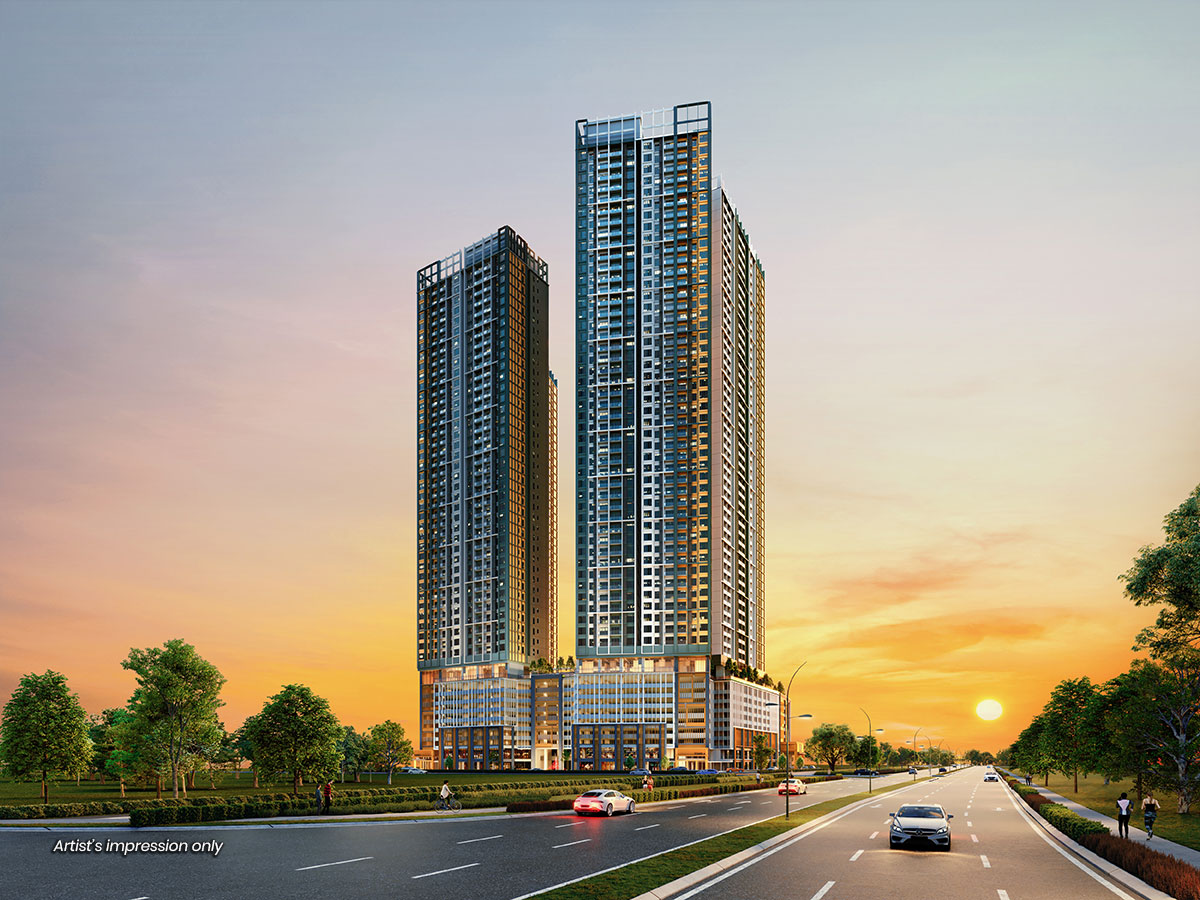
- AndaBreeze Residences — freehold twin towers in Bandar Cassia, the same locality as the MediCity parcel
- Seiras Residences — freehold dual-key condominium
- Vi Residence — freehold, Savantia Valley
- Versa — freehold, Aspen Vision City
- Anggun Residences — condominium living near Design Village
- Savana Utropolis — a completed freehold condominium, useful as a benchmark for what the district has already delivered
Comparing a completed block against an unbuilt one in the same district is the fastest way to calibrate expectations. If you are weighing that trade-off in general terms, our notes on new launch versus subsale set out where each option carries its risk.
How to Read the Next Batu Kawan Announcement
More announcements will come, in Batu Kawan and everywhere else with an industrial catchment. A workable habit is to sort each one into one of three boxes before reacting.
Box one: a plan. Land identified, value estimated, approvals outstanding. Treat it as information about intent and nothing more. Box two: an approved project. Licence and advertising permit issued, plans approved, units offered under a statutory sale agreement. This is the only box that competes with the unit you are considering. Box three: completed stock. Built, handed over, and either occupied or sitting empty — the category that actually sets resale pricing around you.
The MediCity first phase sat in box one for nineteen months and left without moving. That is a common outcome, not an unusual one, and it is why our new launch checklist and our guide on how to buy a new launch in Malaysia both start with approval status rather than with the brochure. The same logic sits behind the ongoing policy argument over build-then-sell: the further a project is from completion when you commit, the more of the delivery risk you are carrying yourself.
Frequently Asked Questions
Is the Batu Kawan MediCity project cancelled?
Not as a matter of record. FBG Holdings filed on 21 August 2026 that its subsidiary had proposed ceasing the collaboration with Penang Development Corporation and that discussions were ongoing. A proposed cessation under negotiation is not a completed termination, and no reason for the proposal was disclosed in the filing.
What was MediCity in Batu Kawan supposed to include?
The first phase was planned with roughly 30% medical content, including a 200-bed specialist hospital, a wellness centre and a healthcare complex. It was also to contain a commercial area called FBG Global Park, an international school, and residential components made up of serviced apartments and villas. The wider master plan covered about 235.8 acres.
Who owns the MediCity land in Bandar Cassia?
The 51.172-acre first-phase parcel was being sold by Penang Development Corporation under the January 2025 agreement, at RM111.45 million in cash. When that agreement was announced, the land was vested in the Penang State Authority, PDC was to apply for alienation, and individual title had not been issued. The purchase remained subject to conditions precedent.
Does this affect people who already bought a home in Batu Kawan?
Not directly. The agreement covered one undeveloped parcel and one pair of parties. Projects that already hold their approvals and are selling or completed in the district are separate legal entities with their own land, licences and sale agreements. The indirect effect is on expectations: a hospital and an international school that had been assumed as future neighbourhood amenities are now unscheduled.
Why does a RM2 billion development value not mean 2 billion ringgit of new homes?
Gross development value is a developer’s own estimate of total sales if everything planned is built and sold, spread over many years and based on assumed future prices. It is a planning and financing figure with no approval status attached. Actual supply is measured in completed units, which is what national overhang statistics count.
How do I check whether a Batu Kawan new launch is approved to sell?
Ask for the developer licence and advertising permit number and confirm it against the housing ministry registry, check that title is issued and building plans are approved, confirm the sale and purchase agreement follows the statutory schedule with a housing development account named, and visit the site to see whether physical work has started. A project that clears all four is in a different category from one that has only been announced.